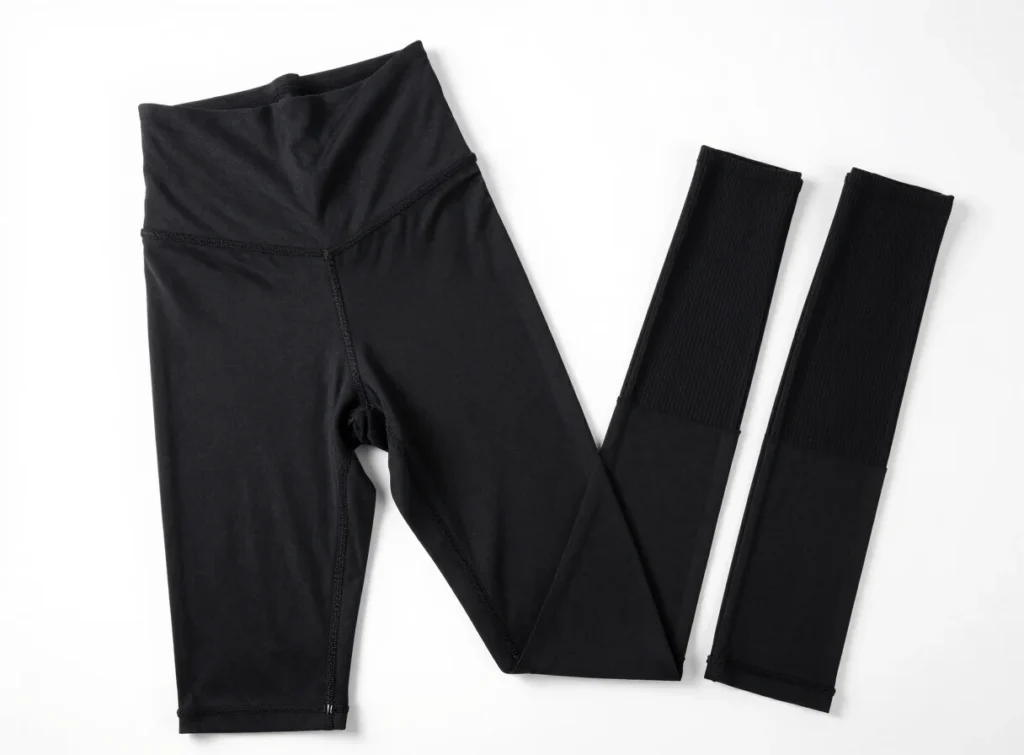
Fabric is the single biggest reason customers love or return a pair of leggings. The same pattern can feel premium or cheap depending on what it is cut from. This leggings fabric guide compares the main options, explains the specs to ask your manufacturer for, and helps you match the right fabric to your brand and price point.
The Three Main Leggings Fabrics
| Fabric | Feel | Strengths | Best for |
| Nylon spandex | Smooth, soft, cool | Premium handfeel, strong stretch and recovery, very durable | Premium yoga and gym leggings |
| Poly spandex | Slightly firmer | Moisture-wicking, great for sublimation prints, good value | Training, running and printed leggings |
| Cotton spandex | Soft, natural | Comfortable and breathable | Lifestyle and lounge leggings |
Nylon vs Polyester Spandex: Which Should You Choose?
Choose nylon spandex if you are building a premium yoga or gym brand. It has the “buttery” handfeel customers associate with high-end leggings, and it resists pilling and abrasion well.
Choose polyester spandex if you want printed leggings, strong moisture-wicking for running and training, or a lower price point. Polyester holds sublimation prints brilliantly, which nylon cannot do.
Many brands use both: nylon spandex for their core solid-colour range and poly spandex for printed and performance styles.
Specs to Ask Your Manufacturer For
- Composition: for example 75% nylon / 25% spandex. Higher spandex content means more stretch and compression.
- Fabric weight (GSM): heavier fabrics feel more supportive and are more opaque. Most of our leggings fabrics run from 180 to 300 GSM.
- Finish: brushed (soft, matte) or smooth (sleek, cooler).
- Recovery: how well the fabric snaps back after stretching, so leggings do not bag at the knees.
How to Make Sure Leggings Are Squat-Proof
“Are they squat-proof?” is the first question customers ask. Opacity depends on fabric weight, knit density and colour. Always do a squat test on your samples in good light, especially for lighter colours. Choosing a heavier GSM or a double-knit construction for pale shades avoids returns.
Construction Details That Match the Fabric
- Flatlock seams to prevent chafing
- Gusseted crotch for movement and durability
- Wide, double-layer waistband that does not roll down
- Side or waistband pockets for phones and keys
See all styles we make on our custom leggings manufacturing page, and pair them with matching sports bras or full yoga sets. For high-support styles, see our compression wear.
Choosing Colours and Matching Sets
If you sell leggings with matching bras or tops, have every piece dyed in the same dye lot. Different fabrics take dye differently, so approve colour on the actual fabrics, not just on a Pantone card.
Building a wider range? Read our guides to starting a golf apparel brand and the triathlon club kit guide.
Work with Sialkot Fitness Wear
Sialkot Fitness Wear is a custom and private label manufacturer in Sialkot, Pakistan, making leggings, sports bras and matching activewear sets for export clients in the USA, Canada, UK, Europe, Australia and the Middle East. Our MOQ is 50 pieces per style, colour and design, samples take 8 to 10 days, and bulk orders take 3 to 4 weeks, shipped door-to-door by DHL or FedEx with duties-paid (DDP) delivery available.
Ready to start? Send us your designs and quantities for a free quote.
Frequently Asked Questions
What is the best fabric for leggings?
Nylon spandex is best for premium, soft leggings, while polyester spandex is better for printed, moisture-wicking and lower-cost styles.
What GSM should leggings fabric be?
Most quality leggings use fabric between about 180 and 300 GSM. Heavier fabrics feel more supportive and are more opaque.
How do I make sure leggings are squat-proof?
Choose a dense, heavier fabric, especially for light colours, and squat-test every sample in good light before bulk production.